
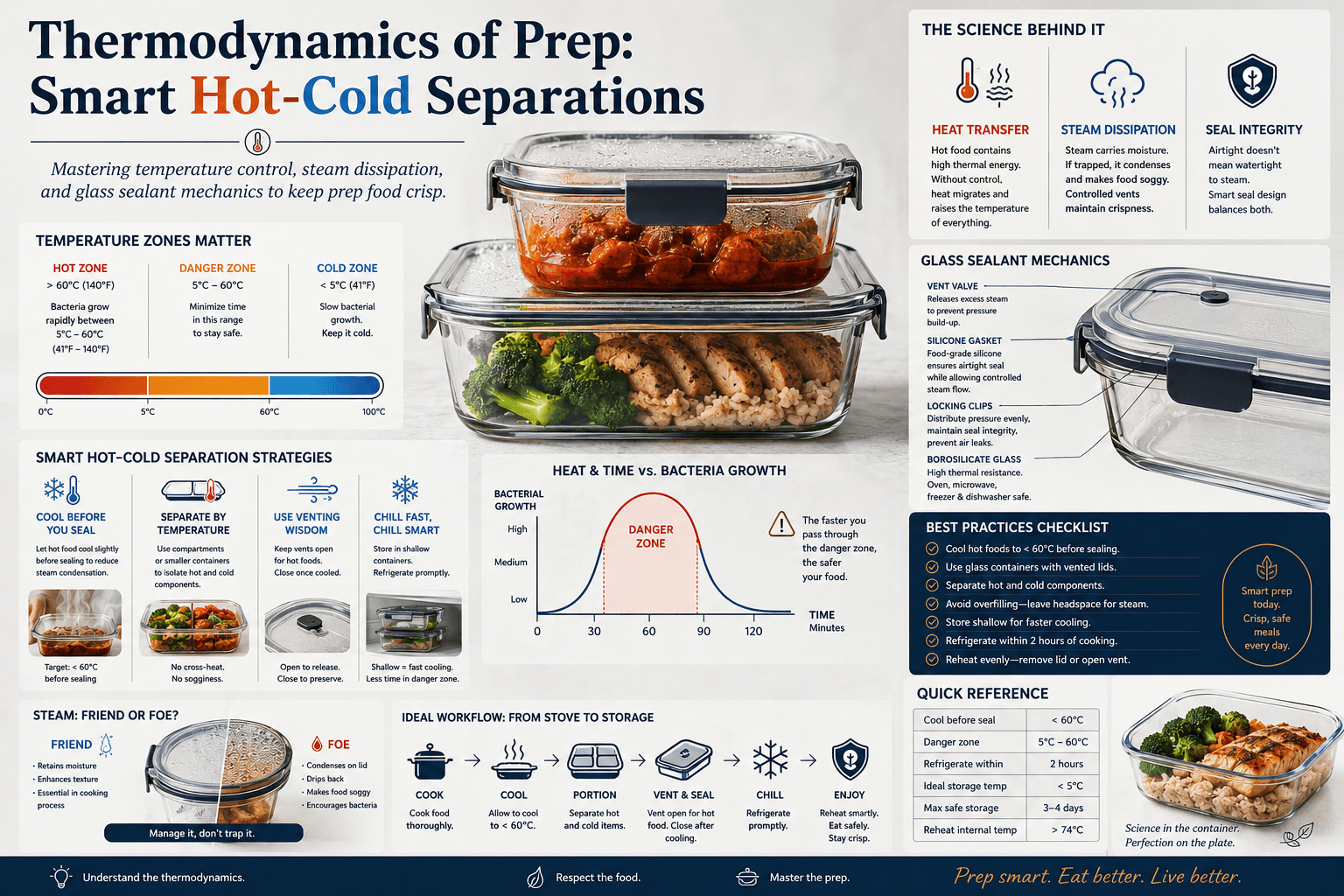
Thermodynamics of Prep: Smart Hot-Cold Separations
A thermodynamic approach to meal prepping, focusing on steam mitigation, bacterial safety guidelines, and osmotic control to maximize preservation.
Prevent soggy meal preps and bacterial growth with physics-backed refrigeration, cooling, and osmotic separation techniques.
Thermodynamics of Prep: Smart Hot-Cold Separations
Meal prepping is a balancing act against bacterial colonization, condensation, and osmotic pressure. Simply putting cooked meals into plastic containers and sealing them immediately is a recipe for soggy textures and accelerated spoilage.
By understanding the thermodynamics of cooling and food preservation, you can keep your prepped meals fresh, crisp, and safe for days.
1. Steam Condensation: The Crisp Destroyer
When hot food is sealed inside a container, it continuously releases water vapor. As this warm vapor contacts the cooler lid of the container, it undergoes a phase change back into liquid water.
The Rain Effect
This condensed water drops back down onto your food, turning crispy roasted vegetables, grains, and proteins into soggy mush.
The Solution
Let your hot ingredients cool completely on wide wire racks or sheet pans before packaging. This allows steam to escape into the room rather than trapping it inside the container.
2. Refrigeration Thermodynamics: Safe Cooling Speeds
Many home cooks place hot containers directly into the refrigerator to cool them quickly. However, this raises food safety concerns:
- The Danger Zone (40°F to 140°F / 4°C to 60°C): This is the temperature range where harmful bacteria multiply rapidly. Food should not sit in this zone for more than 2 hours.
- Raising Fridge Temperature: Placing a hot, heavy container into a closed refrigerator transfers heat to the air, raising the internal temperature of the fridge. This can warm up neighboring perishable foods (like milk or raw meat) into the danger zone.
- Air Circulation: Refrigerator fans cool by circulating air. Stacking warm containers blocks this airflow, slowing the cooling rate of the food in the center.
Efficient Cooling Rules
1. Cool on the Counter First: Let hot food cool at room temperature for up to 1 hour (never exceed 2 hours).
2. Divide into Small Portions: Shallow containers allow heat to dissipate faster than deep pots.
3. Leave Space Between Containers: Do not stack containers in the fridge until they are cold.
3. Managing Osmotic Pressure: Keep Greens Crisp
Osmotic pressure governs how water moves across plant cell membranes. Understanding this concept is the key to preventing salads from wilting.
Osmosis in Food
Water moves from areas of low solute concentration (inside plant cells) to areas of high solute concentration (outside the cells, where salt and acid are present).
Low Solute (Inside Cell) ──> Membrane ──> High Solute (Salts/Acids Outside)
(Water escapes cell) (Cell collapses/wilts)
If you salt your fresh greens or dress them with vinaigrette ahead of time, the salt and acid draw water out of the plant cells, causing them to collapse and wilt.
Dry-Wet Separation
Store high-moisture ingredients (tomatoes, cucumbers) and dressings in separate compartments or small jars. Combine them with your leafy greens just before serving to preserve cellular turgor pressure.
4. Troubleshooting Meal Prep Safety FAQ
How long can prepped food be stored in the fridge?
For optimal safety and texture, consume prepped meals within 3 to 4 days. After this window, bacterial activity begins to rise, and flavors degrade.
Can I freeze prepped meals?
Yes, but starch and water structures change during freezing. Potatoes and cooked pasta can become mushy when thawed because freezing breaks their gelatinized starch structures. Stick to freezing stews, sauces, and braised meats.
What is the best container material?
- Glass: Highly recommended. It is non-porous, does not absorb odors or stains, handles temperature transitions safely, and can be microwaved without chemical leaching.
- BPA-Free Plastic: Lightweight and convenient, but can degrade over time and absorb fats and colors from foods.
Conclusion
Successful meal prepping requires managing moisture, heat, and osmotic shifts. Cool your food before sealing to prevent condensation, pack dressings separately to keep greens crisp, and portion meals into shallow containers for rapid cooling.